Short Content: Formats, Lengths and Cadence That Work
Key takeaways
- Short content is any post under about 90 seconds or 300 words, built for one goal: awareness, leads or retention.
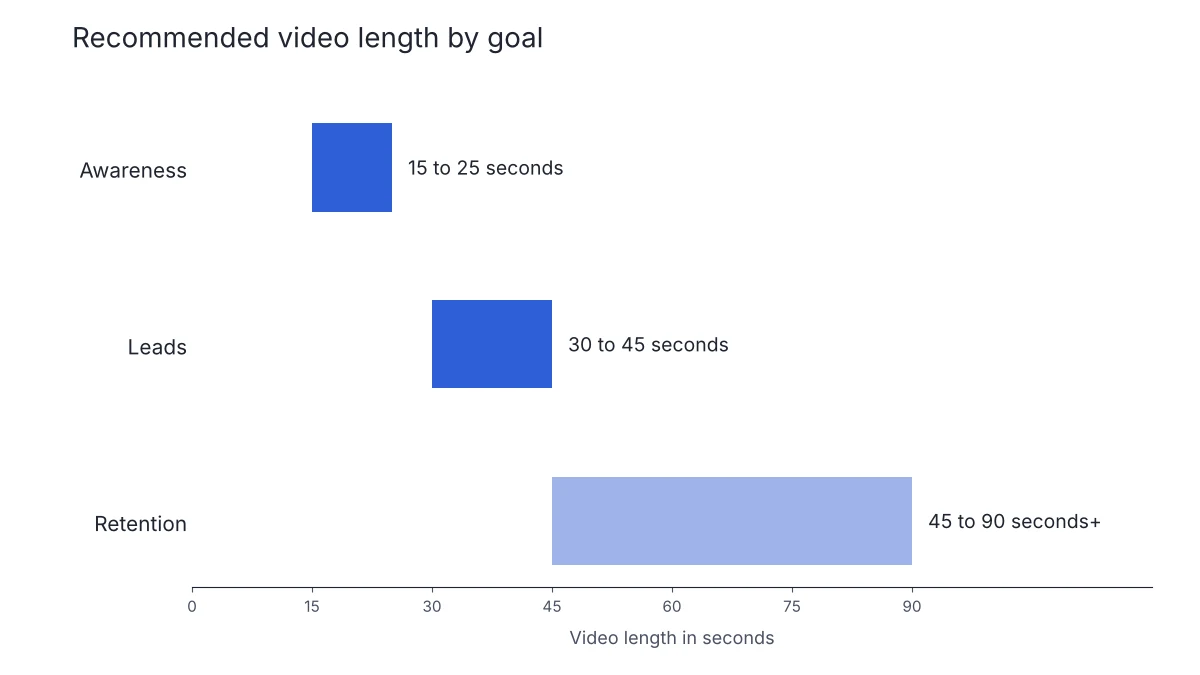
- Match length to the goal: 15 to 25 seconds for awareness, 30 to 45 for leads, longer for retention when the content earns it.
- For awareness, posting daily on one platform beats scattered weekly posts; leads need only 3 or 4 focused videos a week.
- Faceless and blog-to-video formats let you post vertical video daily without opening an editor.
- Before you commit to a tool, check what a re-render costs, because per-render credits add up when a take goes wrong.
Short content is any post under about 90 seconds or 300 words, built for one goal: awareness, leads or retention. This framework maps each goal to the right format (Shorts, Reels, TikToks or text snippets), the right length, a realistic posting cadence and a production checklist you can run in under an hour a week without an editor.
What counts as short content in 2026?
Short content is anything built to be consumed in about a minute and produced faster than it is watched. For a local business that covers four formats, each with its own length range and job.
Vertical video: Shorts, Reels and TikToks
The core format. YouTube Shorts accept vertical or square videos of up to three minutes (YouTube Help). Reels and TikToks allow longer still, but 15 to 60 seconds covers a restaurant's dish close-up, a gym's form tip or a listing walkthrough on all three.
Faceless channel videos and story videos
Faceless videos are narrated clips with no one on camera: countdown shorts, blog-post summaries, daily tips. Story videos are often shorter and looser, around 15 to 30 seconds. If you would never sit down to edit, this is the format that can run on autopilot. Our FAQ explains how the AI writes, narrates and makes each one.
Text snippets and captions
Captions and hashtags are short content too. A two-line caption under a Short, or a text snippet pulled from a blog post, does its job with zero seconds of watch time: get found, get understood, get clicked.
How long should short content be on each platform?
The practical rule: match length to the goal. Awareness clips run 15 to 25 seconds, lead-generation clips 30 to 45 seconds, and retention pieces (a walkthrough or a tip series) can run longer. Anything past 60 seconds needs a reason to exist.
| Platform | Sweet spot | Maximum | Best for |
|---|---|---|---|
| YouTube Shorts | 25 to 45 seconds | 3 minutes | Search-friendly answers, countdown shorts |
| Instagram Reels | 15 to 30 seconds | Several minutes, and Instagram keeps raising it | Story videos, before-and-after, local proof |
| TikTok | 20 to 40 seconds | Several minutes, and longer for some accounts | Personality, day-in-the-life, tips |
YouTube Shorts
Shorts reward a tight hook in the first two seconds and a single point per clip: a restaurant showing one dish, a gym showing one exercise, a realtor answering one buyer question. If a topic needs 90 seconds, split it into two Shorts.
Instagram Reels
Reels are where local audiences check whether you're real. Shorter is safer: 15 to 30 seconds with captions and hashtags, cut so the payoff lands before someone swipes.
TikTok
TikTok tolerates longer clips better than the others, but 20 to 40 seconds still wins for a business with no editor. A faceless channel posting every day works here because the format forgives simple production. VideoContent's Blog to Video turns a blog post into a vertical video of about a minute without a timeline in sight.
Which short content formats work best for B2B audiences?
For local B2B, three formats carry most of the weight: on-camera clips, faceless narration and blog-to-video. The right pick depends on whether you can get on camera and what the video needs to prove.
Faceless narration against on-camera
On-camera builds trust fastest for real estate and med spas, because clients book the person. Faceless narration wins for gyms and local-service businesses that post every day but cannot film daily. Avatar generators and short-form video studios solve different jobs, and mixing them up is where budgets get burned. Keep vertical video under 90 seconds; every platform accepts that length.
Blog-to-video for service businesses
If you already write about listings, treatments or menus, blog-to-video turns each post into a narrated vertical clip with captions and hashtags. One blog post becomes a YouTube Short and a Reel without filming anything. If you want a second opinion on which format fits your business, ask us.
How do you choose between Shorts, Reels and TikToks for your goal?
Start from the goal, not the platform
- Awareness: vertical video under 30 seconds, posted daily to all three platforms. Reach comes from volume and repetition.
- Leads: one 45 to 60 second video a week that answers one buying question (pricing, process, before-and-after) on the platform your customers actually check, with a clear next step in the caption.
- Retention: short story videos and countdowns for regulars (openings, schedule changes, events), posted a few times a week where existing customers already follow you.
The platform matters less than the match between goal and cadence. A restaurant chasing awareness on one platform weekly will lose to a competitor posting daily on three, while a med spa chasing leads does not need daily volume at all. It needs a handful of clear, specific videos that answer the questions patients ask before booking.
Running VideoContent through the same framework
An honest self-assessment against the same criteria. VideoContent handles awareness well: it writes, narrates and makes vertical video, then posts to YouTube, TikTok, Instagram and Facebook on schedule, so daily multi-platform posting is its core job, and faceless formats like the true crime shorts generator fit the daily-volume model. For leads, it can make the 45 to 60 second explainer, but how specific the script is depends on the brief you give it, so expect to supply the buying questions yourself. For retention, scheduled posting covers countdowns and story videos, though the formats are template-driven rather than bespoke. That is the trade-off for never opening an editor.
How often should a business post short content?
Cadence by goal
For awareness, posting daily on one platform beats three videos a week scattered across three. For leads, 3 or 4 posts a week is enough if each points at a single offer. For retention, 1 or 2 a week keeps existing customers warm without burning through your ideas. Let the goal set the cadence, not a rule you read once.
What a team of 1 to 10 people can actually sustain
Honest maths: filming three vertical videos takes an hour, and editing them takes another three you don't have. That's why faceless channels and blog-to-video formats exist: AI writes, narrates and makes the video, so daily output stops depending on your calendar. Platform limits are generous, so length is rarely the constraint; production time is.
Posting by hand works up to about three videos a week. Past that, scheduled posting earns its keep. Daily scheduled posting of business videos is on VideoContent's Pro+ plan at $39 a month (pricing).
How do you build a repeatable short content workflow?
The production checklist
Run the same five steps every week, whatever tool you use:
- Pick the format for each goal. Awareness gets before-and-after clips and story videos; leads get a promo video with one clear call to action; retention gets countdowns and repurposed blog posts.
- Write the script first. One idea, one hook in the first two seconds, captions planned in.
- Narrate and make the vertical video. AI narration and rendering handle this if you will never open an editor.
- Add captions and hashtags. Captions are not optional, because many people watch with the sound off.
- Post to YouTube, TikTok, Instagram and Facebook. Same vertical file, all four platforms.
An honest check on our own tool against that list: VideoContent covers steps 2 to 5, writing, narrating, making and posting the videos, and it is built around the formats in step 1. Step 1 is still your call, because no tool knows your business goals better than you do.
Batching and scheduled posting
Batch once a week: pick your formats, feed in your blog posts or offers, and make the week's videos in one sitting. Then schedule them so each video goes out on time without you touching it. A faceless channel that posts every day is just this loop on autopilot, with you reviewing the output instead of editing clips.
What should short content cost, and how do you avoid credit surprises?
Flat monthly against per-render credits
Credit pricing can punish exactly the people short content is meant to help. When generative video credits are spent per render, a bad take costs the same as a good one, and a few retries can use up a month's credits. Credit and quota models are common across generative video tools, so read the pricing page, including what a re-render costs, before you commit.
A flat monthly plan removes most of that risk. On VideoContent you can start free, Pro is $19 a month with unlimited Standard videos, Pro+ at $39 a month adds scheduled posting, and posting to more platforms goes up to $79 a month (pricing). Because Standard videos are unlimited on Pro, making a video again costs nothing extra.
How do you measure whether short content is working?
One metric per goal
Pick one number per goal and check it weekly. Awareness: views on Shorts, Reels and TikToks. Leads: profile visits and DMs, because a local business converts in messages, not dashboards. Retention: repeat viewers, the people who come back to a faceless channel or your story videos week after week.
Skip everything else for now. Watch time, click-through rates and engagement percentages matter once you have a marketer; until then they just delay the decision to post more or change the video.
Give each goal eight weeks. If views are flat but DMs are up, your short content is doing its job. If nothing moves, change one thing (the hook, the length or the posting cadence) and measure again.
FAQ
Is a faceless YouTube channel still worth starting for a local business?
Yes, if your goal is daily awareness and you cannot film yourself every day. Faceless narration suits gyms, local-service businesses and anyone posting countdowns or blog summaries on autopilot. If customers book the person, as in real estate or med spas, on-camera clips still build trust faster, so treat faceless video as your volume engine rather than your whole strategy.
Can I make short content without ever editing a video myself?
Yes. Blog-to-video and faceless formats let AI write the script, narrate it and make a vertical clip with captions built in. One blog post becomes a YouTube Short or a Reel without you touching a timeline. You still own step one, picking the format and the goal, but the production loop runs without an editor.
Do captions and hashtags still matter on Shorts and Reels?
Yes. Many people watch with the sound off: in a 2019 Verizon Media and Publicis Media survey, 69% said they do in public places. Captions carry the message when the sound is off, and hashtags plus a two-line caption help the clip get found and clicked.
What's the cheapest way to post every day on several platforms?
Batch once a week, make one vertical file per video, and use scheduled posting to send it to YouTube, TikTok, Instagram and Facebook. Check what a re-render costs before choosing a tool. On VideoContent, Pro+ at $39 a month adds scheduled posting to Pro's unlimited Standard videos, and posting to all four platforms is $79 a month.